Special Sessions
| Special Session 3: New Progress of Communication Technology Based on Intelligent Computing and Quantum Intelligent Computing |
With the rapid iteration of 6G communication, artificial intelligence and quantum information technology, the deep integration of intelligent computing, quantum intelligent computing and communication technology has become a core driving force for the innovation of next-generation communication systems. This special session focuses on the cutting-edge progress, key technologies and typical application scenarios of communication technology empowered by intelligent computing and quantum intelligent computing, covering intelligent optimization of communication resource allocation, signal processing of of quantum Intelligent Computing, AI-driven secure communication, intelligent spectrum management, and intelligent communication for UAV swarms and space-air-ground integrated networks. It aims to build a high-level academic exchange platform for scholars in communication engineering, quantum information and artificial intelligence, promote interdisciplinary integration and technological innovation, and explore the key breakthroughs and industrial application paths of next-generation communication technology.
Under the background of the iterative development of 6G technology, traditional communication algorithms are facing severe bottlenecks in complex dynamic networks, multi-dimensional resource constraints and high-precision signal processing. Based on the computing advantages of evolutionary artificial intelligence, intelligent computing and quantum intelligent computing, it solves the complex communication technology problems that are non-differentiable and non-differentiable, and provides a revolutionary solution for the next generation communication system. This topic focuses on the cross-fusion field of intelligent computing, quantum intelligent computing, evolutionary neural network and communication technology, breaking through the track coverage of regular meetings according to traditional communication sub-fields, not only filling the academic exchange gap in this emerging cross-fusion field, but also meeting the major strategic needs of national 6G R&D, quantum information industry and intelligent communication. It can gather high-level research results, promote the deep integration of academic research and industrial application, and provide important theoretical and technical support for the development of the next generation communication system.
Topics:
- 6G/Post-5G Communication Resource Allocation Based on Intelligent Optimization
- Quantum Machine Learning for Next Generation Communication Networks
- Array Signal Processing Based on Intelligent Optimization Algorithms and Quantum Intelligent Computing
- Intelligent Anti-jamming and Safe Communication Technology Driven by Intelligent Computing
- Quantum Intelligent Evolution Communication and Quantum Key Distribution in Air-Space-Ground Integrated Networks
- Quantum Intelligent Computing Evolves Low Latency Communication Systems with Edge Intelligence and Federated Learning
- Intelligent Communication Perception Integration Based on Intelligent Computing and Quantum Intelligent Computing
- Optimization of UAV Swarm Communication Networks Based on Intelligent Computing and Quantum Heuristic Algorithm
Submit Method:
1, submit it via the link: https://easychair.org/my2/conference?conf=iccc202601 (after entering the link, click on the corresponding topic)
2, send your manuscript to iccc2015@vip.163.com with subject "Submit+Special Session-3+Paper Title". (请通过邮件发送稿件,邮件题目:Submit+Special Session-3+Paper Title)

Assoc. Prof. Hongyuan Gao, Harbin Engineering University, China
Hongyuan Gao , received his Ph.D. degree in Communication and Information System from Harbin Engineering University. He worked as an associate professor and Ph.D. Supervisor at the College of Information and Communication Engineering, Harbin Engineering University. His research interests include wireless communications, intelligent computation, artificial intelligence, signal processing, Internet of Things, radar technology, image processing and quantum communication. He has undertaken more than 20 projects such as the National Natural Science Foundation, Special Grant from the China Postdoctoral Science Foundation, China Postdoctoral Science Foundation, etc. He has won three first prizes for scientific and technological progress at provincial and ministerial levels. He has participated in more than 20 projects including the National Natural Science Foundation of China and various horizontal and vertical projects. Based on these projects, he published more than 100 papers, more than 200 patents, 2 monographs and 4 national-level theme cases in the database. He has solved many technical problems for many enterprises and has successfully transferred some patents.
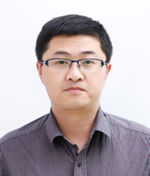
Dr. Qinglin Zhu, China Research Institute of Radiowave Propagation, China
Zhu Qinglin, received his doctorate from Xidian University in 2010. He worked as a Researcher and Ph.D. Supervisor at the 22nd Research Institute of China Electronics Technology Group Corporation (CETC). He received his doctorate from Xidian University in 2010. He has been engaged in radio wave propagation theory, aerospace environment monitoring and propagation effect evaluation applications. He is a head of the Space Environment Subgroup within the Specialized Space Professional Group of the Equipment Development Department (EDD), a member of the Aerospace Appraisal Committee, a member of the Environmental Modeling and Simulation Professional Committee, and an editorial board member of the Journal of Radio Wave Science. He won the first and third prizes of the Group's Science and Technology Progress Award, the second and third prizes of National Defense Science and Technology Progress Award, two approved standards, and published one monograph. He is a young top-notch talent in Qingdao and an outstanding scientific and technological worker of the National Institute of Electronics.
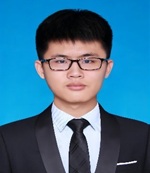
Dr. Yapeng Liu, Harbin Engineering University, Chin
Yapeng Liu, received his B.S. degree from Harbin Engineering University, China, in 2021. Now he is a doctoral candidate of information and communication engineering. He is currently working towards his Ph.D. degree in the College of Information and Communication Engineering at Harbin Engineering University, China. He is also currently a visiting student at the University of Pisa, Italy. His current research interests include array signal processing, optimization theory and related applications. He participated in the National Natural Science Foundation, National Key Research and Development Project, etc. Based on these projects, he published more than 10 papers in IEEE Trans and other journals, and more than 30 patents.

Dr. Xiaoyuan Gu, Harbin Engineering University, China
Xiaoyuan Gu, received her B.E. degree in Electronic Information Engineering from Harbin Engineering University, P. R. China, 2023. She is currently a postgraduate student in Harbin Engineering University. Her current research interests include Integrated Sensing and Communications, massive MIMO, and beyond 5G technologies. She participated in the National Natural Science Foundation,various horizontal and vertical projects, etc. Based on these projects, she published 5 papers and about 20 patents.
